Soil Resistivity Measurement – Wenner Four-Point Method
The Wenner four-point method uses four equally spaced electrodes to measure soil resistivity. The outer electrodes (C1 and C2) inject current, while the inner electrodes (P1 and P2) measure the potential difference.
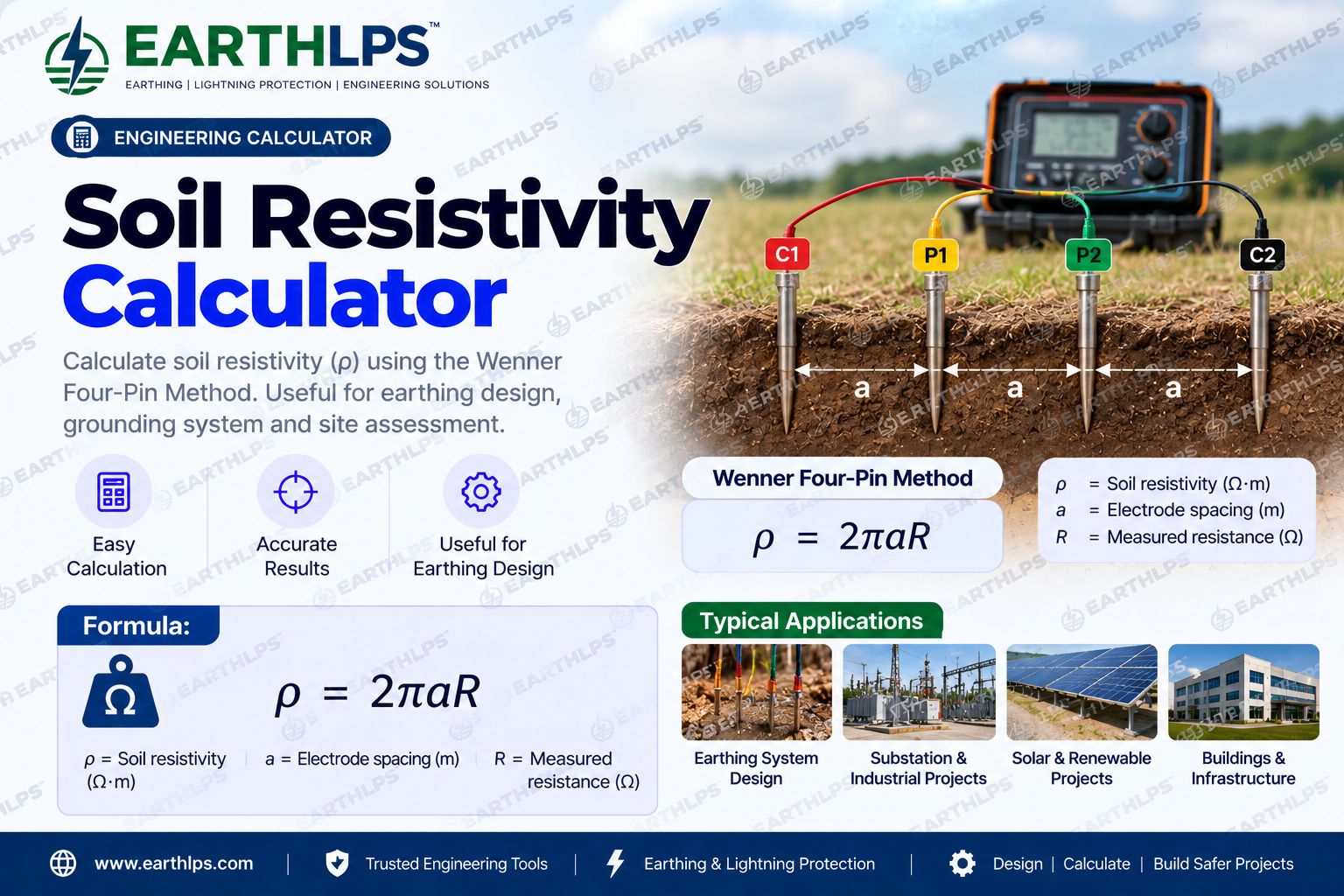
For the standard Wenner method, soil resistivity is calculated as ρ = 2πaR, where a is the equal spacing between adjacent electrodes in metres and R is the measured resistance in ohms. The result is expressed in Ω·m.
Engineering Formula
Wenner 4-point method:
ρ = 2πaR
Where:
ρ = Apparent soil resistivity (Ω·m)
a = Equal spacing between adjacent electrodes (m)
R = Measured resistance from the instrument (Ω)
This formula assumes equal spacing between four electrodes and electrode depth small compared with the spacing. The result is apparent soil resistivity for the selected test spacing, not necessarily the true resistivity of every soil layer. For accurate field testing, follow the instrument manufacturer’s procedure and the applicable test standard. Multiple spacings may be needed to assess soil layering.